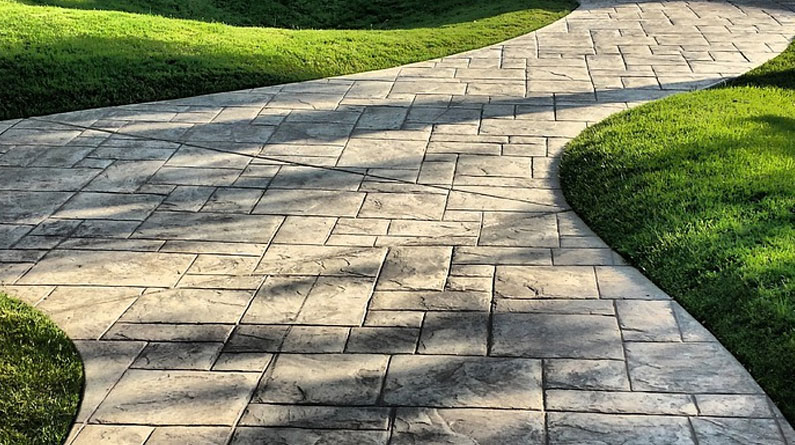
Building the Perfect Stone Wall On Your Property
There’s something so mesmerizing about stone walls. Their heft, texture, and permanence create a statement that no other material can achieve.
They are some of the most beautiful examples of manmade architecture left. In addition to being aesthetically pleasing, stone walls provide practical and visual benefits. They help retain soil, prevent erosion and improve the overall aesthetics of any outdoor space.
These walls are not just for old European castles or New England vineyards anymore! If you’re considering building your stone wall, we’ve covered everything you need to know before getting started.
Stone Wall Basics
There are plenty of reasons to build a stone wall, but some of the best include the following:
- They bring a sense of history and tradition to your landscape.
- They are maintenance-free.
- They are strong and durable and can last for hundreds of years.
- They are eco-friendly, sustainable, and practically zero-carbon footprint.
- They can be used as retaining walls to control erosion.
- They are excellent for privacy and blocking out noise.
- They can be beautiful and ornate or simple and rustic.
Stone walls are comprised of stacked stones that are typically mortared in place. These walls can be built from various materials, including limestone, brick, fieldstone, dry stone, clay, and rock. Each material offers distinct advantages, depending on your needs and the overall design of your wall.

Last update on 2026-06-13 / Affiliate links / Images from Amazon Product Advertising API
Limestone Walls
Limestone is a type of sedimentary rock that can be found in abundance across many parts of the world. It is one of the most widely available and oldest types of wall stone and is usually of a greyish or brownish color.
Limestone is a soft rock that is easy to carve into but also very porous, so it is best to use it in dry areas. Limestone is used for building because it is relatively easy to process into blocks, is strong and rigid, cheap, and easily sourced.
Limestone is used to build dry stone and mortar walls, but it is most common in dry stone walls as it is challenging to get a good mortar joint with limestone. Limestone dry stone walls are typically made without any mortar, and the blocks are stacked together without any binding material.
Limestone walls are naturally resistant to frost and weathering because of their high carbon content, and they are a good choice for gardens and landscaping. Limestone will stain easily, so it is best to use it in areas that don’t get much foot traffic or dirt.
Limestone is a common material used to build garden walls, and many types of limestone are naturally beautiful and ornate, so even simple walls can be incredibly attractive. Limestone is a soft rock but heavy, so lifting and carrying limestone blocks can be difficult, particularly when building a tall wall. Limestone blocks also tend to be expensive and may be more challenging to lay down on a neat, straight wall.
Brick Walls
Brick is another popular building material used to construct a stone wall. Many people choose brick walls for their strength, durability, and beautiful, rich color that comes from firing the brick in a kiln.
Brick walls are expensive, but they will last for decades and look great for many years. Brick walls are generally built using a mortar wall, as bricks are solid enough to hold their own without the stacked stone support. Because most bricks are also made from clay, they absorb water well, making them excellent for erosion control.
They are also highly durable and can stand up to extreme weather conditions. Bricks come in a wide variety of colors and sizes, meaning they can be used to create a personalized, unique look for any kind of stone wall. Bricks are generally heavy, so they can be difficult to lift and move around. They can also be difficult to install, particularly in curved walls or on uneven ground, and they can be very expensive.

Last update on 2026-06-13 / Affiliate links / Images from Amazon Product Advertising API
Fieldstone Walls
Fieldstone is another type of rock that is commonly used to build stone walls. Fieldstone is naturally found in fields, mountains, and other open spaces, where it gets its name. Fieldstone walls are typically built using the stacked stone method, although if the walls are small, you can also use a dry stone method. Fieldstones can be challenging to find and transport, particularly if you are looking for a specific shape or size.
However, fieldstone walls are one of the most rustic-looking types of stone walls. If you are looking for an old-school, country style that has been around for thousands of years, a fieldstone wall is a way to go. They are also easy to build and inexpensive if you can source the materials for free. Fieldstones tend to be heavy, so they are best for shorter walls and will last a long time if properly maintained.
Fieldstone is naturally porous, so it must be protected from water and excess soil. Fieldstone walls are also best in dry areas as they will not hold up well in places with high water tables.
Dry Stone Walls
Dry stone walls, also known as stonewalls, are traditional walls built without mortar. These walls are typically stacked stone, like a fieldstone wall, but they are not necessarily found in fields. They can be made of various materials, including limestone, sandstone, and granite. Dry stone walls have been around for thousands of years. They are common in areas with limited building materials, like deserts and mountainous areas, and where people have minimal access to fancy tools.
Dry stone walls are inexpensive and easy to build and don’t require special tools or skills. Dry stone walls are generally between six and ten stones high, but they can be as tall as you want them to be if you have the patience. Dry stone walls can also be curved or shaped and are best in dry areas as they are not made to withstand much moisture.
Clay Walls
Clay is a prevalent building material, but it is not typically used to construct stone walls. Instead, it is often used to make bricks or tiles that are then used to build a wall. Clay walls are not often used as they are challenging, expensive, and durable.
Clay walls are generally only built in specialized situations, like when you need a very thick wall for a retaining wall or an unusual design for aesthetic reasons. Clay is a common building material because it is easy to find almost anywhere, even in deserts, and it is easy to work with.
However, it is not a great choice for a wall as it has high water content and will not last very long. Clay walls are also costly to construct and must be built on a solid foundation to avoid cracking and crumbling. Clay is not a good choice for an everyday wall, but it is a good option for an unusual design or a specific purpose.
Rock Walls
Rock walls are usually made from a single type of rock or a combination of rocks that are naturally found together. They are built using the stacked stone method and good for modern and contemporary gardens and rustic and country styles.
Rock walls can be challenging to build, especially if you use a single type of rock, as you will need to find rocks that are all roughly the same size. Rock walls are also very heavy, so they are best for shorter walls.
Rock walls are generally quite durable, as long as you use a single type of rock, but they can be difficult to maintain as they are porous, and they may need to be repainted or stained more often than other stone walls.
Stone walls are an excellent way to add structure, beauty, and charm to your property. They can be built in any shape or size and come in a wide variety of materials so that you can find the perfect one for your needs. Stone walls are also incredibly durable and can last for decades if properly maintained.