Fertilizing Tomatoes: Tips for a Big Harvest
Are you looking to grow juicy and flavorful tomatoes in your garden?
Then, fertilizing tomato plants during planting time is a crucial step you cannot afford to miss.
A good tomato fertilizer added to the planting hole can help ensure that your tomato plants receive the necessary nutrients for healthy growth and abundant fruit production.
Additionally, watering your tomato plants regularly with homemade compost tea can provide them with extra nourishment.
From the history of tomato cultivation and its nutrient requirements to the different types of fertilizers and their application methods, we’ve got you covered for planting healthy plants.
Learn about the best planting time and watering techniques for your tomato plants, as well as how to prepare your planting area.
Whether you’re planting tomato seedlings or caring for mature tomato plants, we’ll show you how much fertilizer to use and when to apply it for optimal results. As heavy feeders, tomatoes require regular watering and a nutrient-rich product to thrive.
For those who prefer natural alternatives to chemical fertilizers, homemade compost and fertilizer tea can be effective options.

- FEEDS UP TO 3 MONTHS: Miracle-Gro Shake ‘N Feed Tomato, Fruit & Vegetable Plant Food is a plant fertilizer that feeds plants for up to 3 months, and nourishes above and below the soil
- FORMULATED WITH CALCIUM: This plant food for vegetables contains calcium to help form stronger cell walls, producing better quality and longer-lasting fruits and vegetables
- WHERE TO USE: For use with vegetable, fruit, and tomato plants, whether in-ground or indoor or outdoor container plants
- HOW TO APPLY: Apply this garden product evenly onto the soil and work into the top 1-3 inches of soil for in-ground plants, or lightly work into the soil of established container plants; water to start feeding
- COVERAGE: One 4.5 lb. container of Miracle-Gro Shake ‘N Feed Tomato, Fruit & Vegetable Plant Food feeds up to 128 sq. ft.; reapply every 3 months and water regularly for a beautiful garden all season long

Last update on 2026-10-18 / Affiliate links / Images from Amazon Product Advertising API
So, let’s dive in and learn how to give your tomatoes the best possible start with a balanced fertilizer and compost tea for a bountiful harvest!
Don’t forget to water your plants regularly to ensure they stay hydrated and healthy. When your tomatoes start producing their first fruit, it’s important to continue to feed them with the proper nutrients to maximize their growth potential.
Benefits of Proper Tomato Fertilization: Achieving a Bumper Harvest
Increased Yield and Fruit Quality with Proper Fertilization
Tomatoes are heavy feeders, meaning they require a lot of nutrients to grow and produce fruit. Proper fertilizer application ensures that the plants receive all the necessary nutrients, which leads to increased yield and improved fruit quality.
Fertilizer tea is also a great option for those looking for an organic alternative to release fertilizer, as it provides a slow release of nutrients over time.
Using soluble fertilizer can help ensure that the plants receive a quick boost of essential nutrients when needed.
Nitrogen and phosphorous are essential for the growth of tomato seedlings, and a lack of these nutrients can result in stunted growth and reduced yield. Feeding the seedlings with the right amount of nitrogen and phosphorous fertilizer at the right time is crucial to ensure healthy growth.
Incorporating compost into the soil can provide a natural source of plant nutrients.
Phosphorus is another critical nutrient required by tomato plants. It helps with root development, flower formation, and fruit ripening. A phosphorus deficiency can cause poor root growth, delayed maturity, and low fruit quality.
To avoid such a situation, it is recommended to fertilize tomatoes using a fertilizer application method. One option is to use a slow-release fertilizer that gradually releases nutrients over time.
Alternatively, a soluble fertilizer can be used for faster absorption by the plant.
Potassium is essential for tomato plants as it helps with water regulation within the plant cells, making it crucial to fertilize tomatoes. It also plays a role in disease resistance and improves fruit flavor, so it’s important to feed your tomato plants with potassium-rich fertilizers.
To ensure healthy growth, use fertilizers that are high in potassium content.
Proper fertilization that includes all three primary macronutrients (nitrogen, phosphorus, potassium) will ensure healthy plant growth resulting in an abundant harvest of high-quality tomatoes.
To achieve this, fertilize regularly, feed your plants with the necessary nutrients, and use a balanced fertilizer.
Prevention of Nutrient Deficiencies and Diseases in Tomato Plants
Tomato plants are susceptible to various nutrient deficiencies resulting from inadequate soil fertility or improper fertilization practices.
For instance, it is important to fertilize and feed the plants properly and use appropriate fertilizers.
- Calcium deficiency in tomato plants causes blossom end rot, where black spots appear on the bottom of tomato fruits. To avoid this issue, it is recommended to use good tomato fertilizer or organic tomato fertilizer for tomato seedlings.
- Magnesium deficiency results in yellowing between leaf veins.
- Iron deficiency causes yellowing leaves with green veins.
- Zinc deficiency leads to small leaves with distorted edges.
To prevent these nutrient deficiencies from occurring, it’s essential to feed tomato plants with sufficient amounts of nutrients through proper fertilization practices.
Furthermore, using a good tomato fertilizer to feed your plants can help prevent diseases caused by nutrient imbalances or deficiencies.
For example, a lack of calcium can lead to blossom end rot, while excess nitrogen from improper feeding can make plants more susceptible to diseases like early blight.
Cost-Effective Approach to Maximize Tomato Production
Proper fertilization is a cost-effective approach to feed and maximize tomato production. Providing the right amount of nutrients at the right time reduces the risk of nutrient deficiencies and diseases, resulting in higher yields and improved fruit quality.
Moreover, proper fertilization practices can help feed tomato plants and reduce fertilizer costs by preventing the overuse or underuse of fertilizers. Applying too much fertilizer wastes money and pollutes the environment by leaching into groundwater or running off into nearby water bodies.
On the other hand, applying too little fertilizer will result in poor plant growth and reduced yield. Therefore, applying the right amount of fertilizer to feed the plants is crucial based on soil test results and crop requirements.
Understanding the Nutrient Needs of Tomato Plants for Optimal Growth and Yield
Tomatoes are one of the most popular vegetables to grow in a home garden. However, growing healthy tomato plants requires more than just planting and watering them in the soil.
Fertilizing tomatoes is essential to provide the necessary nutrients for optimal growth and yield.
Essential Macronutrients Required by Tomato Plants
Macronutrients are essential elements that plants need in large quantities for growth, development, and reproduction.
The three primary macronutrients required by tomato plants are nitrogen (N), phosphorus (P), and potassium (K).
- Nitrogen is an essential component of tomato fertilizer and chlorophyll, which gives leaves their green color. It is also responsible for plant growth and foliage development.
- Phosphorus plays a vital role in energy transfer within the plant, particularly during fruiting stages. It also helps with root development, making it an essential component in tomato fertilizer.
- Potassium in tomato fertilizer contributes to overall plant health by regulating water movement within cells and improving disease resistance.
When fertilizing tomatoes, it’s crucial to ensure they receive adequate levels of these macronutrients throughout their growth cycle.
Secondary Nutrients That Contribute to Plant Health
Secondary nutrients are elements that tomato fertilizer requires in smaller quantities than macronutrients but still play an important role in tomato plant health.
- Calcium: Calcium is an essential nutrient for tomato plants. It aids in forming cell walls, improves soil structure, and reduces blossom end rot, making it a crucial component of any tomato fertilizer.
- Magnesium: Magnesium is an essential component of chlorophyll production.
- Sulfur aids in tomato plant seed production and improves flavor quality, making it an essential tomato fertilizer.
While secondary nutrients may not be as critical as macronutrients when fertilizing tomatoes, they still contribute significantly to overall plant health.
Micronutrients That Play a Vital Role in Plant Growth
Micronutrients are essential elements that tomato plants require in trace amounts for growth and development.
These elements can be found in tomato fertilizer.
- Iron: Iron is necessary for chlorophyll production and helps with energy transfer within the plant.
- Zinc: Zinc aids in tomato plant root development and improves disease resistance.
- Manganese: Manganese contributes to photosynthesis, enzyme activation, and overall plant health.
While micronutrients may be required in small quantities, they are vital in ensuring healthy tomato plants.
Signs of Nutrient Deficiencies
Lack of proper nutrients can lead to nutrient deficiencies, which can cause stunted growth or poor fruit quality.
Here are some signs that your tomato plants may be lacking specific nutrients:
- Nitrogen deficiency: Yellowing leaves starting from the bottom of the plant
- Phosphorus deficiency: Stunted growth and dark green leaves
- Potassium deficiency: Brown leaf edges and weak stems
- Calcium deficiency: Blossom end rot on fruits
- Magnesium deficiency: Yellowing between leaf veins
- Sulfur deficiency: Light green leaves
If you notice any of these signs in your tomato plant, adjusting your fertilization routine is essential.

- Package contains 18 tomato fertilizer spikes and are produced to avoid wasteful runoff, mess, hazards and smells
- Formulated with a 6-18-6 NPK to ensure a continuous supply of nutrients below the surface, where the plants active roots are growing
- Application is simple and should be done at the time of planting or early in the growing season
- Jobe’s fertilizer spikes are pre-measured to provide the right amount of nutrients for tomatoes without risk of over fertilizing
- Jobe’s fertilizer spikes come in a variety of formulas and pack sizes to help provide lush foliage and vibrant color to your lawn and garden
Last update on 2026-10-18 / Affiliate links / Images from Amazon Product Advertising API
When to Fertilize Tomato Plants: Best Practices and Seasonal Considerations
Tomatoes are one of the most popular vegetables grown in home gardens, and fertilizing them is crucial for a healthy harvest.
However, timing is everything.
Timing of Fertilizer Application Based on Growth Stages of Tomato Plants
The growth stages of tomato plants can be divided into three main phases: vegetative growth, flowering, and fruiting. Each phase requires different nutrients, so applying fertilizer at the right time is important.
During the vegetative stage (when the plant is growing leaves and stems), nitrogen is essential for healthy growth. It’s recommended to apply a nitrogen-rich fertilizer at planting time or 2-3 weeks after planting.
When the plant starts to flower, it’s time to switch to a balanced fertilizer that contains equal amounts of nitrogen, phosphorus, and potassium (NPK). Phosphorus helps promote flower development, while potassium aids in fruit development.
Once the tomato plants start forming fruits, switch back to a nitrogen-rich fertilizer. Nitrogen encourages foliage growth which supports tomato plant fruit production.
Too much nitrogen during this stage can result in excessive foliage growth at the expense of tomato plant fruit production.
Factors Affecting Fertilizer Uptake by Plants
Temperature and soil moisture are two key factors that affect how well plants absorb nutrients from fertilizer.
Tomato plants grow best in warm temperatures between 70-80°F (21-27°C). If temperatures drop below 55°F (13°C) or rise above 90°F (32°C), nutrient uptake may be reduced.
Soil moisture also plays a crucial role in nutrient absorption. If the soil is too dry or too wet, plants may not be able to absorb nutrients properly. It’s important to maintain consistent soil moisture levels throughout the growing season.
Precautions to Take When Applying Fertilizer During Different Seasons
The timing of fertilizer application also depends on the season. Here are some precautions to take when fertilizing tomatoes during different seasons:
Spring
In spring, it’s important to wait until soil temperatures reach at least 60°F (15°C) before planting tomatoes. Applying fertilizer too early can lead to nutrient leaching and loss.
Summer
During the hot summer months, it’s best to apply fertilizer in the early morning or late evening when temperatures are cooler. This helps prevent fertilizer burn, which can damage plants.
Fall
In the fall, it’s important to stop fertilizing tomato plants about 2-3 weeks before the first expected frost date. This allows plants to harden off and prepare for winter dormancy.
How to Fertilize Tomato Plants: The Best Methods for Incredible Yield
Different methods for applying fertilizer
Fertilizing tomatoes is essential to get a bountiful harvest. However, how you apply the fertilizer can make all the difference in how well your plants grow.
There are three main methods for applying fertilizer: broadcasting, side-dressing, and foliar feeding.
- Broadcasting involves spreading the fertilizer evenly over the entire garden bed before planting or after planting.
- Side-dressing involves adding fertilizer in a shallow trench next to each plant or along the row of plants.
- Foliar feeding involves spraying a liquid fertilizer directly onto the plant leaves.
Each method has advantages and disadvantages, but choosing one that works best for your situation is important.
Dosage recommendations based on soil type and plant needs
Determining how much nitrogen your plants need is one of the most critical factors. Too much nitrogen can result in excessive foliage growth at the expense of fruit production.
On the other hand, too little nitrogen can lead to stunted growth and poor yields.
The amount of nitrogen needed depends on several factors, including soil type, weather conditions, and plant variety. As a general rule of thumb, sandy soils require less nitrogen than heavy clay soils. Indeterminate tomato varieties generally require more nitrogen than determinate varieties because they produce more foliage.
To determine how much fertilizer your tomato plants need, it’s best to have your soil tested by a reputable lab. They will provide you with detailed information about your soil’s nutrient content and pH level so that you can make an informed decision about how much fertilizer to apply.
Tips for avoiding over-fertilization or under-fertilization
Over-fertilizing or under-fertilizing your tomato plants can be just as detrimental as not fertilizing them at all.
Here are some tips for avoiding these common mistakes:
- Always follow the recommended dosage instructions on the fertilizer package.
- Monitor your plants regularly for signs of nutrient deficiencies or excesses, such as yellowing leaves or stunted growth.
- Adjust your fertilization schedule and dosage based on your plants’ needs and growth stage. For example, young seedlings require less fertilizer than mature plants.
- Water your plants thoroughly before and after fertilizing to prevent root burn.
Liquid vs. Granular Fertilizers: Choosing the Right Type for Your Tomatoes
One of the most important decisions you’ll have to make is using liquid or granular fertilizers. Both types have advantages and disadvantages, but choosing the right one for your tomatoes will depend on various factors.
Differences between liquid and granular fertilizers
Liquid fertilizers are soluble in water, so plants can easily absorb them through their roots. They typically come in concentrated form and must be mixed with water before application.
Granular fertilizers, on the other hand, come in pellets or other solid forms that are applied directly to the soil around the plant.
One of the main differences between these two types of fertilizers is how quickly they release nutrients. Liquid fertilizers tend to provide an immediate boost of nutrients because they are absorbed quickly by the plant.
Granular fertilizers, on the other hand, release nutrients slowly over time as they break down in the soil.
Advantages and disadvantages of each type
There are several advantages and disadvantages to using liquid or granular fertilizers for your tomatoes:
Liquid Fertilizer
- Advantages:
- It provides an immediate boost of nutrients.
- It can be applied directly to leaves (foliar feeding)
- Easy to mix with water and apply evenly
- Disadvantages:
- It needs frequent application due to quick absorption by plants.
- It can be more expensive than granular fertilizer.
- Requires careful measuring and mixing
Granular Fertilizer
- Advantages:
- The slow-release formula provides long-lasting nutrition.
- Easy to apply evenly around plants
- It can be less expensive than liquid fertilizer.
- Disadvantages:
- It takes longer for nutrients to become available.
- It may require multiple applications throughout the growing season
- It cannot be applied directly to leaves.
Factors to consider when choosing between liquid or granular fertilizers
When deciding which type of fertilizer to use for your tomatoes, there are several factors you should consider:
- Water availability: Liquid fertilizers require water for application and absorption, so granular fertilizers may be a better option if you have limited water resources.
- Nutrient needs: Tomatoes are heavy feeders and require a lot of nutrients throughout the growing season. If you need to provide a quick boost of nutrition or have specific nutrient deficiencies, liquid fertilizer may be more effective.
- Soil conditions: Granular fertilizers can help improve soil structure over time as they break down. If you have poor soil conditions, using granular fertilizer may be beneficial in the long run.
- Time commitment: Liquid fertilizers typically require more frequent applications than granular fertilizers. Consider how much time you’re willing to commit to fertilizing your tomatoes before deciding.
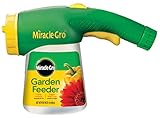
- EASY FEEDING: Feeding your outdoor plants is a breeze with the Miracle-Gro Garden Feeder; this fertilizer sprayer for garden hoses is easy to hook up
- READY-TO-USE HOSE END SPRAYER: This garden sprayer comes prefilled with 1 lb. of Miracle-Gro Water Soluble All Purpose Plant Food
- FOR OUTDOOR PLANTS: With this garden hose attachment, you can instantly feed your outdoor plants in containers or gardens including flowers, vegetables, trees, and shrubs
- HOW TO USE: To use plant food outdoors to fertilize plants, fill the jar to the desired area line with Miracle-Gro water soluble plant food, attach the feeder to a garden hose, turn on water, and squeeze the trigger
- COVERAGE: The Miracle-Gro Garden Feeder sprayer covers up to 500 sq. ft. of garden area (requires 1 1/4 lbs. of Miracle-Gro water soluble plant food)

Last update on 2026-10-18 / Affiliate links / Images from Amazon Product Advertising API
Organic vs. Synthetic Fertilizers: Pros, Cons, and Which is Best for Your Tomatoes
Tomatoes are one of the most popular crops grown in home gardens. They require proper care to produce a bountiful harvest, and fertilizing is essential to their growth process.
However, choosing between organic and synthetic fertilizers can be confusing for gardeners.
Definition of Organic and Synthetic Fertilizers
Organic fertilizers are made from natural materials such as compost, manure, or bone meal. These materials release nutrients slowly over time as they break down in the soil. On the other hand, synthetic fertilizers are made from chemicals that quickly boost plant nutrients.
Comparison between Organic and Synthetic Fertilizers
Cost-Effectiveness
One significant advantage of organic fertilizer is its cost-effectiveness in the long run. While it may have a higher upfront cost than synthetic fertilizer, it provides slow-release nutrients that can last for months or even years.
This means less frequent applications than synthetic fertilizers, which need more frequent applications to maintain plant health.
Environmental Impact
Organic fertilizer is environmentally friendly since it comes from natural sources that do not harm the environment when used correctly. It also helps improve soil quality by adding beneficial microorganisms that support healthy plant growth.
Synthetic fertilizer hurts the environment due to its chemical components that can leach into waterways and cause pollution.
Overusing or misusing synthetic fertilizer can lead to soil degradation since it does not promote microbial activity like organic matter.
Nutrient Availability
Organic fertilizer releases nutrients slowly over time as it decomposes in the soil, providing consistent nourishment for plants throughout their growing season. It also improves soil structure by increasing water-holding capacity and reducing erosion.
Synthetic fertilizer provides a quick boost of nutrients to plants, but its effects are short-lived. Plants may require more frequent applications to maintain their health and vigor.
Factors to Consider When Choosing Between Organic or Synthetic Fertilizers
Soil Quality
Before choosing between organic or synthetic fertilizers, it is essential to understand your soil’s quality. If your soil is healthy and rich in organic matter, you may not need synthetic fertilizer since the soil can provide enough nutrients for plant growth.
Plant Needs
Different plants have varying nutrient requirements. For example, tomatoes require high amounts of nitrogen, phosphorus, and potassium for optimal growth.
Organic fertilizers such as compost and manure contain these essential nutrients in varying amounts that can meet the needs of tomato plants.
Application Frequency
Organic fertilizer releases nutrients slowly over time; hence fewer applications are required than synthetic fertilizer. However, applying organic fertilizer at the right time and in the right amount is crucial to avoid over-fertilization that can harm plant health.
Synthetic fertilizers require more frequent applications since their effects are short-lived. Overuse can lead to salt buildup in the soil that harms plant roots.
Expert Tips for Successful Tomato Fertilization
In conclusion, fertilizing tomatoes is crucial to achieving a bumper harvest. Understanding the nutrient needs of tomato plants and following best practices for fertilization can lead to optimal growth and yield. It’s important to consider seasonal variations and choose the right type of fertilizer for your tomatoes, whether it be liquid or granular, organic or synthetic.
To summarize, here are some key takeaways:
- Proper fertilization leads to a successful tomato harvest
- Nutrient needs vary based on growth stage and season
- Best practices include applying fertilizer evenly and avoiding over-fertilization
- Liquid and granular fertilizers have different advantages
- Organic fertilizers may improve soil health but require more time to see results
- Synthetic fertilizers provide quick nutrients but may harm beneficial microorganisms
If you want to ensure the best possible outcome for your tomato plants, make sure to follow these expert tips for successful tomato fertilization.
FAQs
1. How often should I fertilize my tomato plants?
It’s recommended to fertilize tomato plants every 2-3 weeks during the growing season.
2. Can I use too much fertilizer on my tomatoes?
Yes, over-fertilizing can cause damage to the plant and reduce yield. Follow instructions carefully and avoid applying too much fertilizer at once.
3. Should I use organic or synthetic fertilizer on my tomatoes?
Both types of fertilizer have their pros and cons. Organic options may improve soil health in the long run but take longer to see results. Synthetic options provide quick nutrients but may harm beneficial microorganisms in the soil.
4. Is it better to use liquid or granular fertilizer on my tomatoes?
Both types of fertilizer can be effective, but liquid options allow for more precise application, while granular options release nutrients slowly over time.
5. Can I use leftover vegetable scraps as a natural fertilizer for my tomatoes?
Yes, vegetable scraps can be composted and used as a natural fertilizer for tomato plants. However, it’s important to properly compost the scraps to avoid attracting pests or spreading disease.